
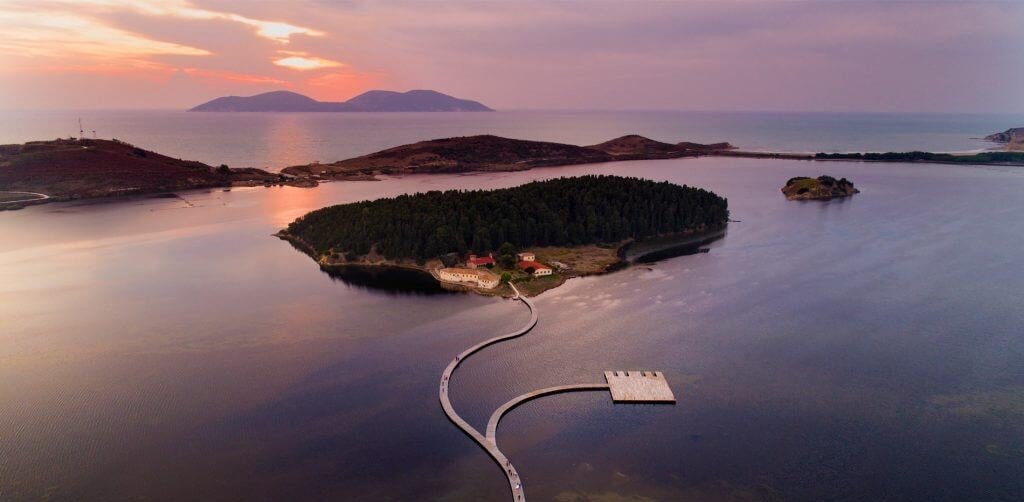
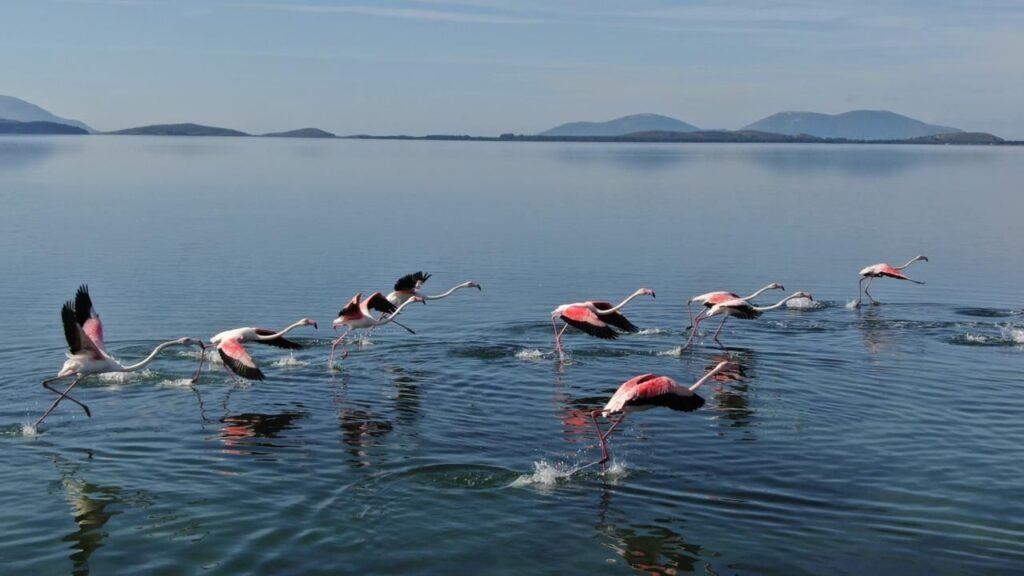
When people think of Narta, they often think of flamingos.
Thousands of pink birds standing gracefully in shallow waters, creating one of the most iconic natural scenes in Albania. But Narta is not important because flamingos are beautiful. Narta is important because it helps them survive.
Every year, thousands of flamingos depend on the lagoon’s wetlands to feed, rest, and regain energy during their journeys across the Mediterranean. Rich in aquatic life and protected habitats, Narta provides the conditions these birds need to survive.
For flamingos, this is not simply a stop along the way. It is a sanctuary.
And flamingos are only the beginning of the story.
One of Albania’s Most Important Ecosystems
The Vjosa–Narta Protected Landscape is one of the richest biodiversity areas in Albania and one of the most valuable coastal ecosystems in the Mediterranean.
More than 200 bird species have been recorded here, while over 70 threatened species depend on the area for food, shelter, and survival. Scientists describe Narta as a mosaic of interconnected ecosystems where lagoons, wetlands, river estuaries, salt marshes, sand dunes, Mediterranean pine forests, and freshwater habitats function together as one living system.
This diversity is what makes Narta so special. It is not a single habitat. It is an entire network of habitats working together to support life.
The area contains habitats recognized under the Natura 2000 framework, Europe’s most important conservation network, highlighting its ecological significance far beyond Albania’s borders.
A Landscape Thousands of Years in the Making
What makes Narta truly unique is the natural sequence of ecosystems that still exists today.
Close to the sea, shifting dunes are stabilized by specialized coastal plants. Further inland, these dunes transition into juniper habitats and Mediterranean pine forests. Wetlands and estuaries connect freshwater and marine environments, creating ideal conditions for wildlife.
This gradual transition from sea to forest has developed over thousands of years. It provides food, shelter, nesting grounds, migration corridors, and breeding areas for countless species.
Scientists consider this ecological continuity one of the area’s greatest conservation values.
Nature’s Infrastructure
Many people see wetlands as empty spaces. In reality, they are among the most productive ecosystems on Earth.
The wetlands of Narta naturally filter water, store carbon, support fisheries, reduce erosion, and provide habitat for birds and other wildlife. Salt marshes and specialized coastal vegetation create microhabitats that allow many species to thrive under conditions where few others can survive.
The Mediterranean pine forests help stabilize dunes, protect the coastline, and create ecological corridors that connect different habitats. These are services that nature provides for free every single day.
Services that would be incredibly expensive or impossible to replace once lost.
What Is Happening Today?
Today, this protected landscape faces one of its greatest challenges.
Since spring 2026, concerns have grown over construction activities and tourism developments planned within or near sensitive habitats.
Heavy machinery has been reported operating in areas of ecological importance, triggering strong reactions from scientists, environmental organizations, local communities, artists, and concerned citizens.
The concern is simple: Once a wetland is destroyed or fragmented, it cannot simply be rebuilt.
Scientific research conducted before the current controversy had already identified increasing tourism infrastructure, habitat fragmentation, pollution, and human pressure as growing risks to the ecological balance of Narta. Researchers concluded that continuous monitoring, sustainable planning, and careful management are essential to preserve the area’s biodiversity.
A Change in the Law Changed the Conversation
Narta was designated a Protected Landscape in 2004, and its protection was strengthened through legislation adopted in 2017.
However, amendments to Albania’s protected areas law in 2024 opened the door for tourism development within certain categories of protected areas. The changes sparked concern among scientists, conservation experts, and environmental organizations across Albania and Europe.
The debate is no longer only about one project. It is about a much larger question:
What does “protected” really mean if development can take place inside protected landscapes?
Narta Is Not Alone
What is happening in Narta reflects a broader challenge facing Albania’s natural heritage.
The Karavasta Lagoon, famous as one of the most important habitats for the Dalmatian pelican in the Mediterranean, has also faced increasing pressure from human activities over the years.
Across the country, wetlands, rivers, forests, and coastal ecosystems are being asked to compete with short-term economic interests.
Yet these places are not obstacles to development. They are assets. They provide ecological stability, tourism opportunities, climate resilience, and natural wealth that cannot be recreated once destroyed.
Why This Matters to Human Health
At Kungul, we talk about healthier choices. Safer ingredients. More transparency. But health starts long before a product reaches a shelf.
Health begins with clean water, healthy soil, biodiversity, and functioning ecosystems. The food we eat, the air we breathe, and many of the ingredients used in cosmetics and medicine ultimately depend on nature.
Human health and environmental health are inseparable. Protecting biodiversity is not only an environmental responsibility. It is a public health responsibility.
Why We Created the Kungul Silk Foulard
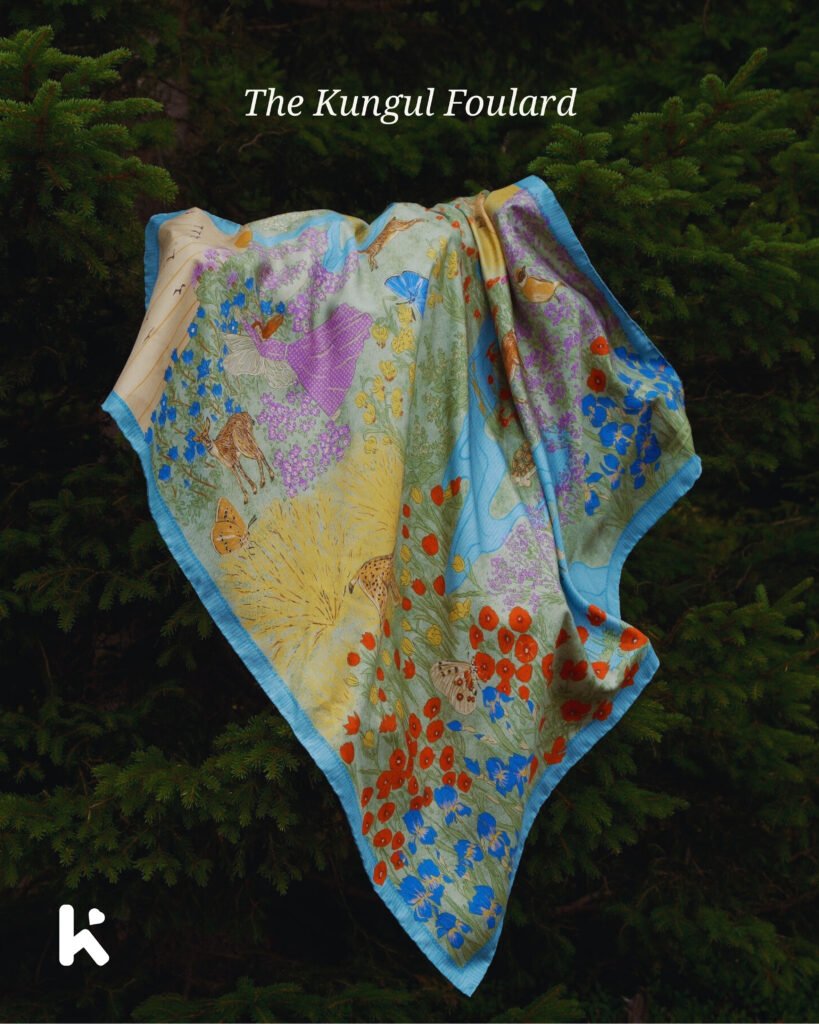
The Kungul Silk Foulard was created as a tribute to Albania’s natural heritage.
At its center stands the Zana, the mythical guardian of nature in Albanian folklore, surrounded by endemic plants, wildlife, rivers, and landscapes that make our country unique.
The foulard is a reminder that nature is not simply scenery. It is culture, history, and identity.
To help protect that heritage, part of the proceeds from every foulard supports the work of PPNEA, one of Albania’s leading organizations dedicated to biodiversity conservation.
You can read the full story behind the Kungul Silk Foulard and its symbolism here: Nature as Heritage: The Kungul Silk Foulard Story.
What Are We Really Protecting?
We are not only protecting flamingos and birds. We are protecting a living system that has taken thousands of years to evolve.
We are protecting wetlands that clean water, forests that stabilize coastlines, habitats that support migration, and ecosystems that help sustain life itself. Most importantly, we are protecting the right of future generations to inherit a country rich in biodiversity, not just rich in development.
Because once biodiversity is lost, we do not simply lose species. We lose part of our natural heritage.
And ultimately, we lose part of ourselves. The future of Narta has not yet been decided. If you believe Albania’s biodiversity deserves protection, add your voice by signing PPNEA’s petition here: Protect Vjosa-Narta Petition.