

Cellulite is everywhere, yet most of what we’ve been told about it is oversimplified or quietly shaming. It’s often presented as something to erase, a flaw caused by fat, laziness, or lack of discipline. Science tells a different story. Cellulite is a structural condition of the skin and subcutaneous tissue, shaped by anatomy, hormones, and connective tissue biology, not by how “good” you are with food or exercise.
Up to 80–90% of post-pubertal women develop cellulite across all ages, body types, and lifestyles. That fact alone should change the conversation. This blog isn’t here to sell miracles. It’s here to explain why cellulite behaves the way it does, why many approaches fail, and what actually makes sense once you understand the biology.
Cellulite isn’t a surface problem, and that’s where most advice goes wrong
At first glance, cellulite looks like simple skin texture: dimples, soft bumps, an uneven finish, most commonly on the thighs, buttocks, and hips. Phrases like “orange peel” describe the appearance, but they don’t explain the why.
From a medical perspective, cellulite reflects changes happening beneath the skin, not on it. It’s shaped by the relationship between fat, connective tissue, skin thickness, and fluid movement in the tissue. That’s exactly why many surface-level “fixes” disappoint: they’re aimed at the outer layer, while the real story sits deeper.
Why cellulite is mostly a female experience
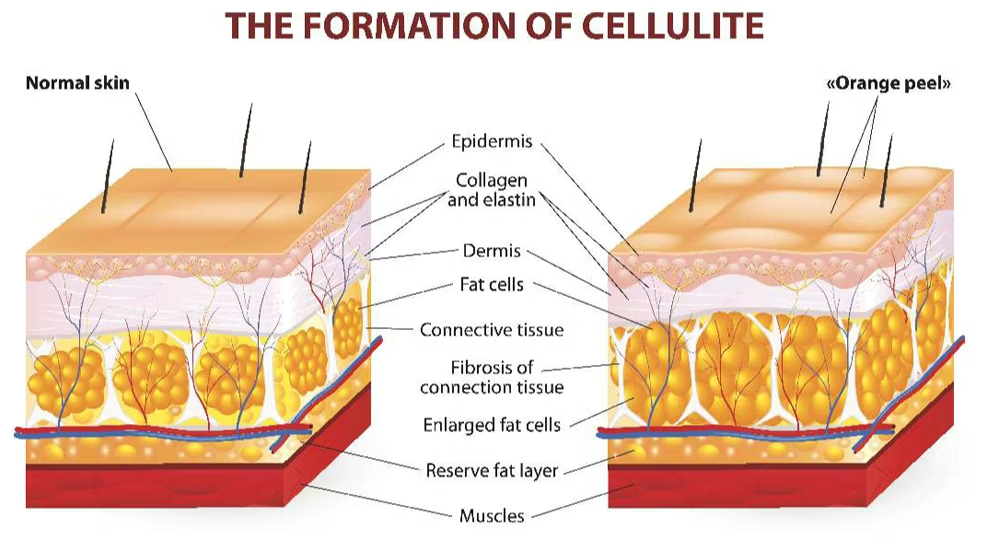
The most important clue comes from anatomy. Cellulite is largely a sex-specific architectural phenomenon, meaning the structure of subcutaneous tissue differs between women and men in a way that makes dimpling far more likely in women. Under the skin, fat is organized into lobules separated by fibrous connective tissue called septa. In most women, septa run more vertically, allowing fat to push upward while the septa pull skin downward, creating dimples when forces become uneven. In most men, septa form a criss-cross pattern, offering stronger internal support. This is why men, even with obesity, rarely develop visible cellulite. This isn’t willpower. It’s geometry.
Why fat loss doesn’t “fix” cellulite
Cellulite is not simply excess fat. Fat cells don’t multiply, they expand and shrink. Weight gain stretches connective tissue, but weight loss doesn’t fully restore its original tension. In some cases, significant weight loss makes cellulite more visible because skin thins and connective support weakens. That’s why cellulite is just as common in slim, athletic women.
Hormones quietly shape everything
Estrogen influences fat distribution, connective tissue elasticity, microcirculation, and fluid retention. This is why cellulite often becomes more noticeable during puberty, pregnancy, postpartum, perimenopause, and menopause, or with hormonal contraception or therapy.
Aging adds to this: as collagen and elastin decline, the dermis becomes thinner and underlying irregularities show more clearly. Lifestyle matters, but not how you’ve been told
Lifestyle doesn’t cause cellulite, but it can amplify how visible it becomes. Low movement, prolonged sitting, dehydration, high-salt and ultra-processed diets, smoking, alcohol, stress, insulin resistance, all affect circulation, lymphatic flow, inflammation, and connective tissue quality.
Hormonal balance plays a key role in how cellulite develops and progresses, and environmental exposure to endocrine disruptors can quietly interfere with estrogen signaling, connective tissue quality, and fat distribution.
(Read more in our in-depth article on endocrine disruptors and everyday exposure.)
The key distinction: lifestyle influences expression, not existence.
Why most treatments disappoint
There is no permanent cure for cellulite. Topical creams may briefly improve appearance by boosting circulation or dermal thickness. Massage and mechanical treatments redistribute fluid temporarily. Energy-based devices can tighten skin but usually require ongoing sessions.
More durable improvements come from structural treatments that release fibrous septa, but even these don’t reset biology and come with trade-offs. Cellulite isn’t one condition; it’s a combination of structure, hormones, tissue quality, and circulation. That’s why no single solution works for everyone.
The reframe most people need
Cellulite isn’t your body failing. It’s the visible result of how female tissue is designed. Once you understand this, the goal shifts from erasing cellulite to supporting skin quality, circulation, and tissue health in a realistic way.
The KungulApproved anti-cellulite daily routine (because biology loves consistency)
If cellulite is structural and fluid-sensitive, aggressive fixes don’t make sense. Consistent, supportive care does.
Dry brushing a few times per week before showering helps stimulate lymphatic flow and circulation. In the shower, Body Salt Scrub Cardamom & Vanilla, used a couple of times per week supports smoother texture and microcirculation: Daily application of Anti-Cellulite Body Balm Cardamom & Vanilla, a nourishing body cream on slightly damp skin, with slow upward massage, supports elasticity and firmness over time.
This routine aligns with the biology. Phytosomal aescin and marine algae support circulation and reduce a puffy appearance. Hydrogenated retinol (H10) stimulates collagen and hyaluronic acid synthesis. Cardamom oil gently warms the skin, boosting microcirculation and supporting drainage.
No extremes. No punishment. Just working with your tissue.
The takeaway
Cellulite is a biological reality, not a cosmetic defect. Science shows it’s rooted in anatomy and hormones, that most treatments improve appearance rather than cause, and that meaningful change comes from supporting structure, not fighting it.
Real skin health starts with understanding, not promises.
By Entela Çeliku, PhD in Natural Product Chemistry